
Yuyo Farm. Week 4
Note: For our English speaking friends the text in english at the bottom of this page and you can leave a comment.
Note: Helemaal onderaan de pagina kun je een reactie achterlaten.
Vierde week Yuyo 21 juli – 27 juli / fourth week Yuyo July 21 - July 27
Onze laatste week bij Yuyo. Het weer is niet te warm wat prettig is voor werken. Deze week is de septic tank, waar de uitwerpselen worden opgevangen, kapot gegaan. Het probleem is dat de tank eigenlijk moet worden uitgezogen, maar niemand wil naar de finca komen om dat klusje te doen omdat de weg hiernaar toe vol kuilen is. Dat betekent dat we nog maar 1 toilet kunnen gebruiken om de tank te ontlasten. Vele vliegen trokken de keuken van Yule en Stefan in, onze vrijwilligers keuken was blijkbaar niet aantrekkelijk, geen vlieg te zien.
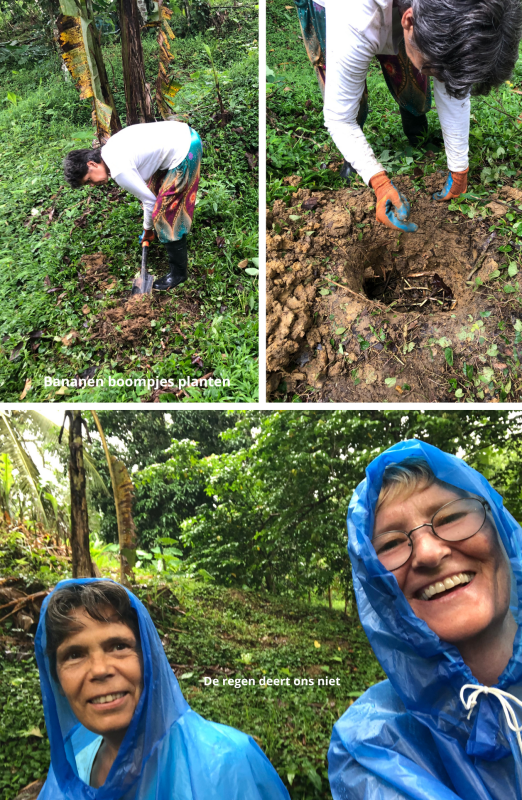
Op het land hebben we 3 kleine bananenboompjes geplant in de stromende regen. Poncho aan om niet doorweekt te worden. De grond is door en door nat met dikke kleiachtige aarde. Gelukkig zijn wij oersterk en lukt het om drie gaten te spitten van 1,5 spade diep. De bananenboompjes staan heerlijk op hun eigen stukje grond te schitteren. De malanga’s hebben ruimte nodig om te groeien. Met de machete wieden het onkruid laag op de grond.
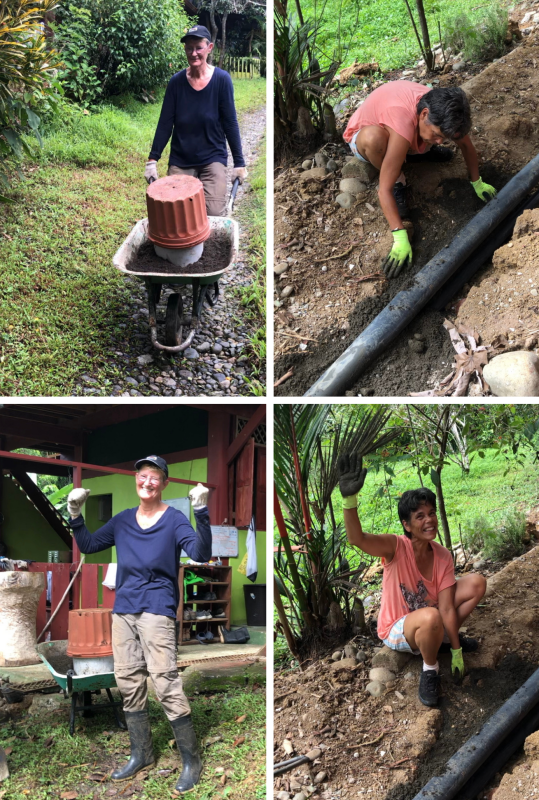
Yule en Stefan zijn bezig met loodgieterswerk. Om het toilet van het guesthouse op een andere tank aan te sluiten worden nieuwe afvoerpijpen aangelegd. Deze buizen lopen voor het huis langs en aan ons de schone taak om zand te scheppen en de pijpen hiermee te bedekken. Een hardwerkend en pittig klusje. Kruiwagen vol nat zand scheppen, naar beneden kruien, lossen en weer omhoog voor een nieuwe lading zand. Gabrielle zorgt voor het dichten van de geul, Lida schept en kruit vooral. Na twee dagen en 25 kruiwagens is de klus nog niet geklaard. Omdat het onze laatste week is krijgen we vrijdag vrij wat betekent dat Yule en Stefan de klus zullen afmaken.
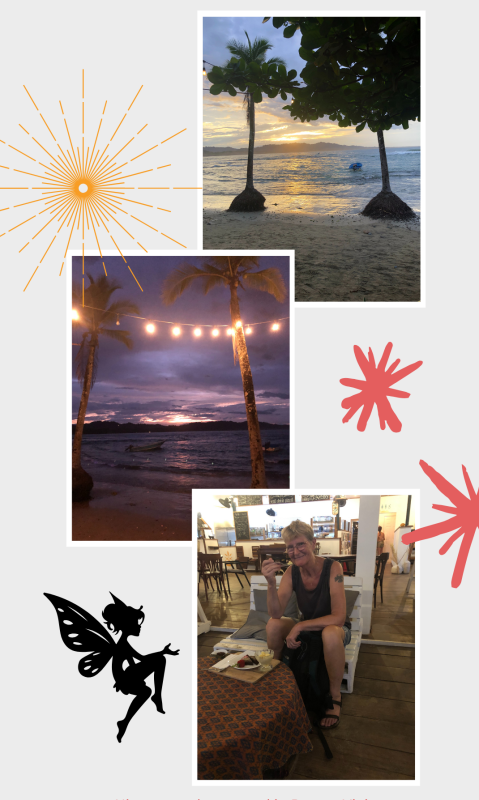
Woensdag lopen we, na het harde werken, naar Puerto Viejo in 2,5 uur. We verdienen wel een lekkere vegetarische maaltijd. Het restaurant staat op het strand en we genieten van de ondergaande zon en van het vele lekkere eten. Het is geen optie om in het donker terug te lopen, dus we bellen Fabian, onze tuk tuk man, die ons veilig “thuis” brengt.
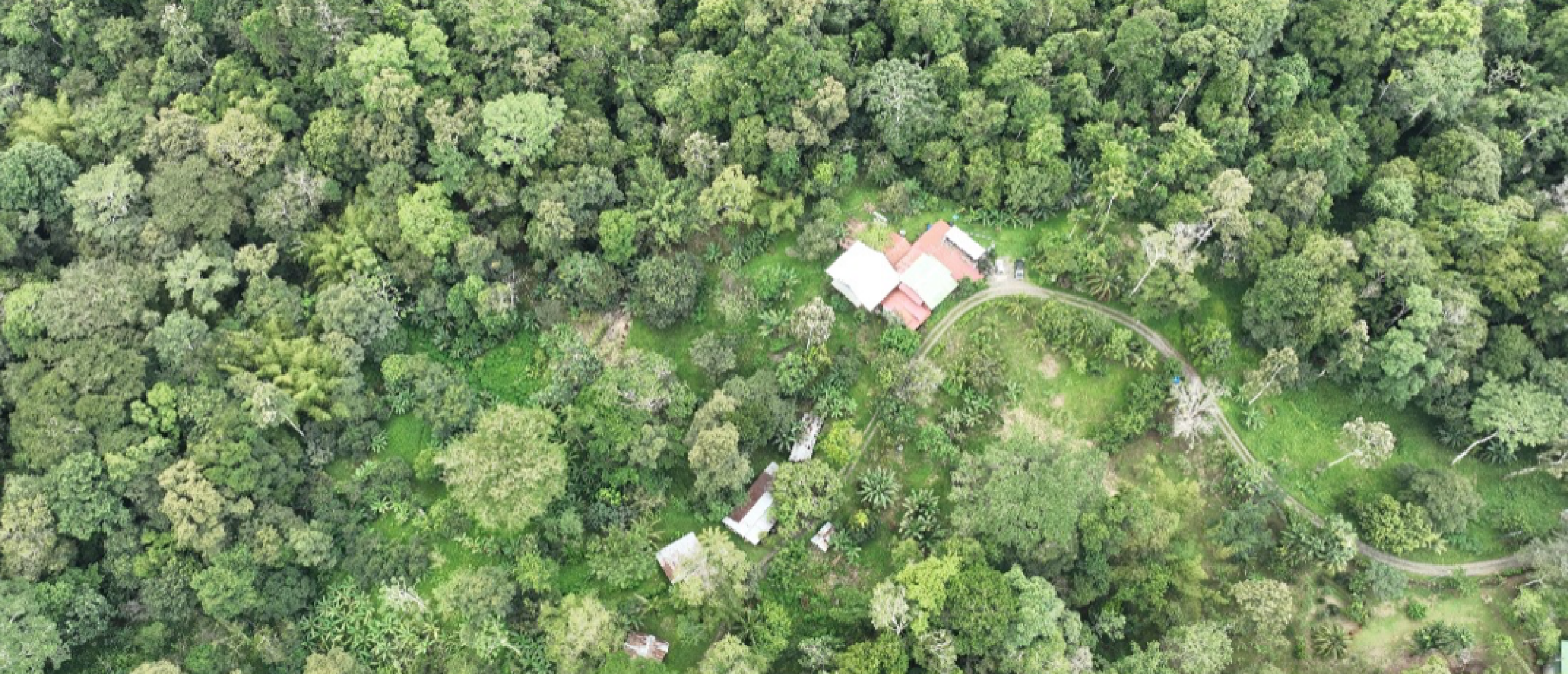
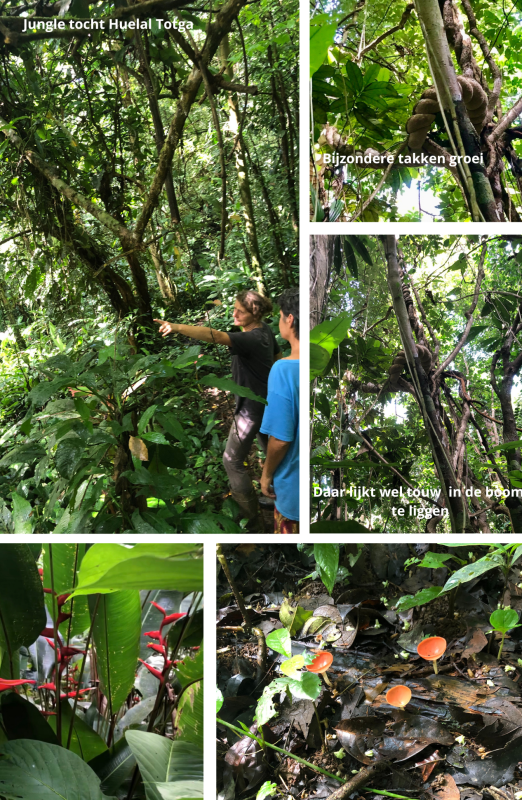
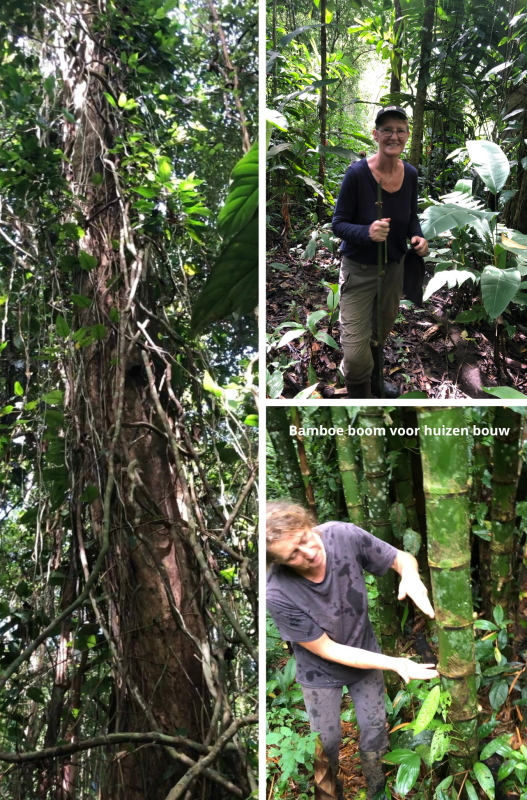
Donderdag krijgen we een rondleiding in de jungle op het terrein van Yule en Stefan. Tweeën een half jaar geleden hebben zij het huidige land gekocht van een man die Ken heet. Voorheen was Yuyo een guesthouse. Omdat er in Costa Rica geen goed systeem is om het afval te verwerken is er, in het verleden, veel afval gedumpt op het terrein zoals huisvuil, plastic, cement, puin etc… Het is een hoop opruimwerk geweest.
Een jaar of 3 geleden wil Ken een aangrenzend stuk land verkopen. Als Yule en Stefan het niet willen kopen zet hij er een hotel op. Ze moeten er niet aan denken dat er een weg wordt aangelegd door de jungle voor toeristen. Onder het mom van ‘ecologisch in de jungle logeren‘ wordt er eerst een hoop kapot gemaakt. Ecotoerisme, een veel gebezigde term hier, bestaat eigenlijk niet omdat er altijd eerst gekapt moet worden en gebouwd. Daarna komen de mensen die de rust van de natuur verder verstoren. Dus met hun laatste geld hebben ze dat stuk land gekocht en ondergebracht in de Association Huelal Totga wat strike well betekent.
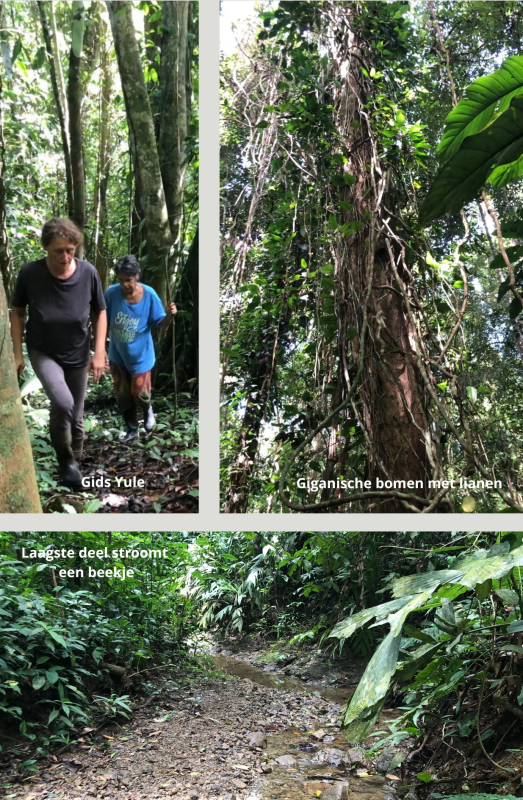
Het heeft 3 jaar gekost voordat alle benodigde handtekeningen waren bemachtigd om te zorgen dat dit land nu echt beschermd is tegen economische exploitatie. Het doel is de jungle te laten voor wat het is. Dit stuk natuur is de verbinding tussen 2 nationale parken zodat de dieren vrij kunnen blijven leven in hun habitat.
Vrijdag oefenen we met klimmen en
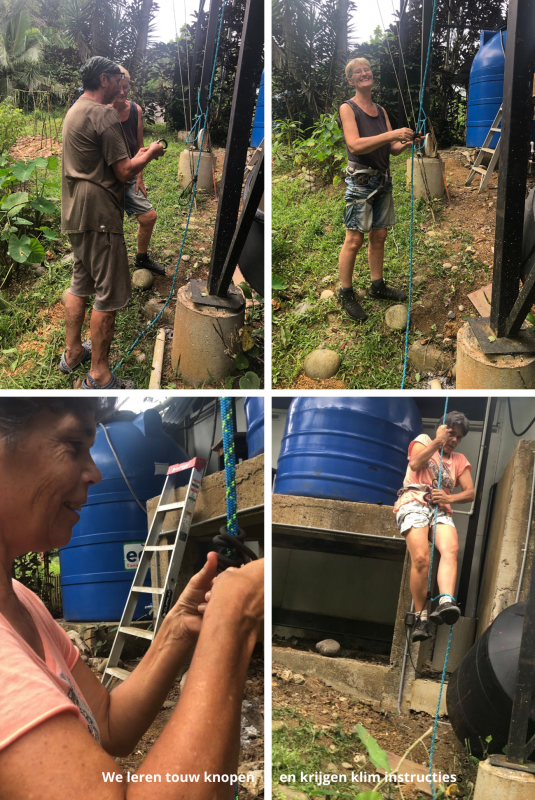
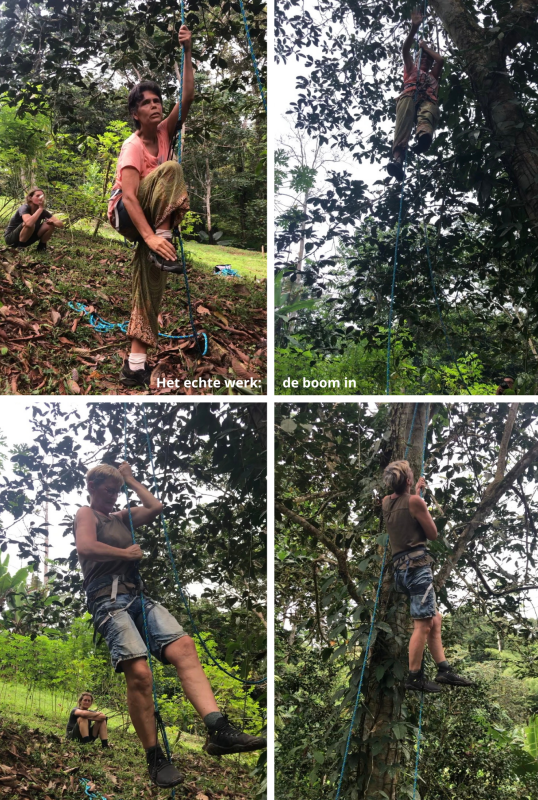
zaterdag gaan we dan echt de boom in. Er is een flinke voorbereiding nodig. Eerst lopen we met al het materiaal nogmaals door de jungle om een goede boom te vinden. We kiezen een johannesbroodboom aan de rand van de jungle. Daarna wordt een tak uitgekozen om aan te klimmen. Die tak is zo’n 7 à 8 meter hoog. We gooien een sok, gevuld met zand aan een dun draadje, na een aantal pogingen over de tak. Aan het uiteinde van het draadje wordt het klimtouw, zo’n 30 meter lang, gebonden en over de tak getrokken. Halverwege het touw wordt de vlinderknoop gemaakt. Een brillante knoop. Aan de ene kant houdt die het touw strak en met het andere uiteinde kun je het touw eenvoudig weer naar beneden trekken. Vervolgens worden er twee kleinere touwtjes aan het klimtouw geknoopt. Je heist jezelf in een klimtuig en bevestigt de karabijnhaak. Het onderste lusje is voor je voet. En dan klimmen maar. Handen hoog, jezelf optrekken en omhoogduwen met je benen. Zo slingeren we klimmend omhoog. Het vraagt kracht en is heel bevredigend. En wat doe je in de boom? Behalve hoge takken weghalen kun je ook een hoog plateau bouwen in een geschikte boom, gewoon voor de uitkijk en de fun.
Op zondag fietsen we naar Puerto Viejo om wat zaakjes te regelen voor vertrek. Maandag gaan we op naar het volgende avontuur.
PS. mocht je geïnspireerd zijn na het lezen van deze blog en aan de Association Huela Totga een donatie willen doen, dan kun je kijken op https://yuyo.info/huelal-totga/.
Text in English
Fourth week Yuyo July 21 - July 27
Our last week at Yuyo. The weather isn't too hot which is pleasant for working. This week the septic tank, where the human waste is collected, broke down. The problem is that the tank actually needs to be emptied, but no one wants to come to the finca to do that job because the road is full of potholes. This means we can only use one toilet. Many flies were drawn into Yule and Stefan's kitchen; our volunteer kitchen was apparently not appealing, not a fly in sight.
On the land, we planted three small banana trees in the pouring rain. We wore ponchos to avoid getting soaked. The thick clay-like soil was thoroughly wet. Luckily we're incredibly strong and managed to dig three holes, 1.5 spades deep. The banana trees are thriving in their own patch of land. The malangas need space to grow. With a machete we weeded the ground low.
Yule and Stefan are busy with plumbing. New downpipes are being installed to connect the toilet to another tank. These pipes run along the front of the house, and our task is to shovel sand and cover the pipes. A hard-working and demanding job. We shovel a wheelbarrow full of wet sand, wheel it down, unload it, and then back up again for a new load. Gabrielle is responsible for filling the trench, while Lida mainly shovels. After two days and 25 wheelbarrows, the job isn't finished yet. Since it's our last week, we get the Friday off, which means Yule and Stefan will finish the job.
On Wednesday, after all the hard work, we walk to Puerto Viejo in 2.5 hours. We deserve a delicious vegetarian meal at a restaurant on the beach where we also enjoy the sunset. Walking back in the dark is no option, so we call Fabian, our tuk-tuk driver, who brings us "home" safely.
On Thursday we get a tour of the jungle on Yule and Stefan's property. Two and a half years ago, they bought the current land from a man named Ken. Yuyo used to be a guesthouse. Because Costa Rica doesn't have a proper waste management system, a lot of trash, such as household waste, plastic, cement, rubble, etc. has been dumped on the property in the past. It's been a lot of cleanup.
About three years ago, Ken wanted to sell an adjacent piece of land. When Yule and Stefan refuse to buy it, he builds a hotel on it. They dread the idea of a road being built through the jungle for tourists. Under the guise of "eco-friendly jungle lodging," a lot of destruction is done first. Ecotourism, a frequently used term here, doesn't really exist because logging and construction always have to take place first. Then come the people who further disturb the tranquility of nature. So with the last of their money they bought that piece of land and incorporated it into the Association Huelal Totga, which means "strike well." It took three years to secure all the necessary signatures to ensure this land is truly protected from economic exploitation. The goal is to leave the jungle as it is. This natural area connects two national parks so that the animals can continue to live freely in their habitat.
Friday we practice climbing and on Saturday we actually climb the tree. Extensive preparation is required. First, we walk through the jungle again with all our equipment to find a suitable tree. We choose a carob tree at the edge of the jungle. Then we select a branch to climb. This branch is about 7 to 8 meters high. After a few attempts, we throw a sock filled with sand on a thin thread over the branch. A climbing rope, about 30 meters long, will be tied to the end of the thread and pulled over the branch. Halfway down the rope, we'll tie a butterfly knot. A brilliant knot. One end keeps the rope taut and the other end allows you to easily pull it down. Then, two smaller cords are tied to the climbing rope. You hoist yourself into a climbing harness and attach the carabiner. The bottom loop is for your foot. And then, off we go. Hands up, pull yourself up, and push up with your legs. That's how we swing upwards. It requires strength and is very satisfying. And what do you do in the tree? Besides removing high branches, you can also build a high platform in a suitable tree, just for the lookout and for fun.
On Sunday, we cycle to Puerto Viejo to take care of some things. Monday, we'll leave for our next adventure.
PS. If you feel inspired after reading this blog and would like to make a donation to the Huela Totga Association, please visit https://yuyo.info/huelal-totga/.