

Op doortocht door het Andes gebergte
Note: For our English speaking friends the text in english at the bottom of this page and you can leave a comment.
Note: Helemaal onderaan de pagina kun je een reactie achterlaten.
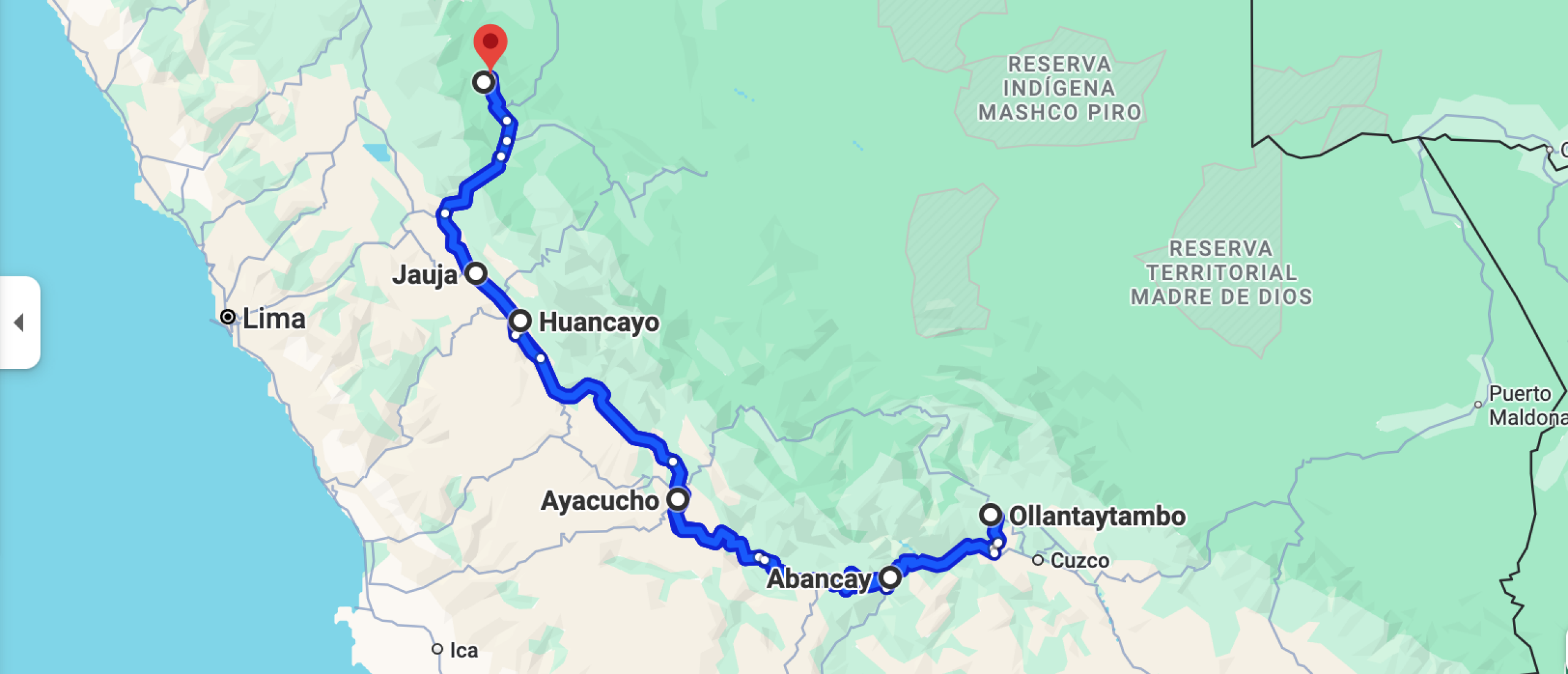
Van Ollantaytambo naar Chontacamba, 10-09 - 14-09 / From Ollantaytambo to Chontacamba, 09-10 - 09-14
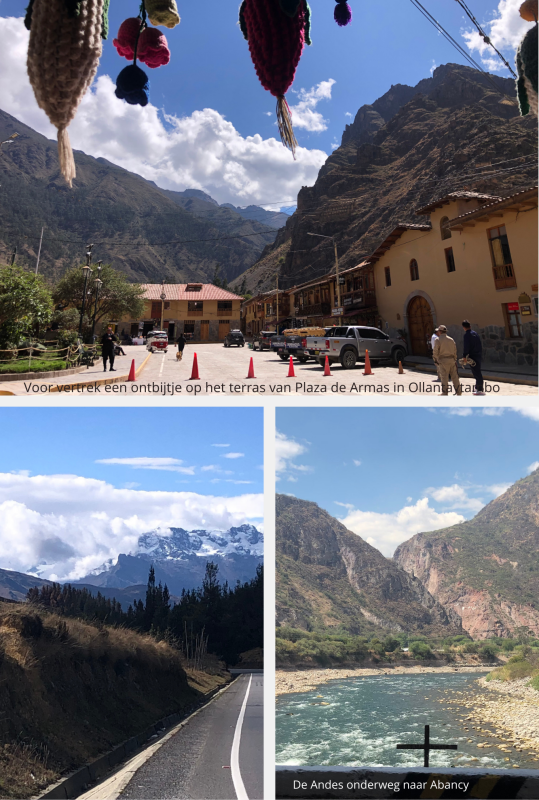
Op woensdag 10 september staan we gepakt en gezakt op de ‘Plaza de Armas’ van Ollantaytambo te wachten op de bestelde taxi chauffeur. Onze bestemming is Abancay, 194 km verderop. Dat is ruim 4 uur rijden. Als we geïnstalleerd zijn in de auto ziet de chauffeur dat we niet naar Cusco willen, wat een ritje van anderhalf uur is. Blijkbaar heeft hij blind gereageerd op de aanvraag. Alle toeristen willen immers naar Cusco, wij doen het echter anders. Na enige discussie wil hij ons wel naar het hotel in Abancay brengen voor een aannemelijke prijs, dachten wij. 500 peruaanse soles is 120 euro, maar alas. De Andes is geen snelweg naar Frankrijk. Bochten, remmen, optrekken, omhoog, omlaag, langzaam, snel. De maag van Lida is het niet eens met de rij-stijl van de chauffeur en gooit de boel eruit. Daar staan we midden op de weg naast een steile afgrond hopend dat er geen auto van achter op ons afscheurt. We zeggen deze reis een paar keer tegen elkaar dat je beter met lege maag kunt reizen.
Na een tocht van 5 uur checken we in het hotel in. Abancay is een grijs en saai stadje waar weinig toeristen komen. We worden dan ook met rust gelaten. Wat een totaal andere omgeving is dan Cusco waar het koopwaar letterlijk op je schoot wordt gedropt. We lopen naar de busterminal om te informeren wanneer de volgende bus gaat naar Ayacucho. Het is er een levendige boel waar meerdere tour aanbieders hun reizen verkopen. Er gaat echter maar 1 bus per dag naar onze bestemming en wel om 1.00 AM oftewel vannacht. In verband met onze beperkte tijd besluiten we vlot door te reizen en kopen een ticket. Vervolgens zoeken we naar een vegetarische restaurant wat nergens te vinden blijkt. Ook niet als we in ons beste Spaans de weg vragen aan meerdere mensen. Uiteindelijk eten we wat uit de supermarkt en rusten in onze kamer.
Om 00.00 uur ’s nachts zitten we op het busstation op de bus te wachten. “Lieverd, het is vandaag 11 september, onze trouwdag, gefeliciteerd”. Een beetje onwerkelijk zitten we te wachten met een boekje en een beetje rond te kijken. Er is bewaking en we voelen ons veilig. Telkens wanneer we horen dat er een bus binnen komt kijken we hoopvol op. Maar nee, keer op keer verteld de half slapende bewaker ons dat het niet onze bus is. Reizigers komen en gaan en verdwijnen in de nacht. Eindelijk daar is onze bus om 03.00 uur. Wij zijn de enige twee reizigers die in Abancay worden opgehaald. De bus is bommetje vol en we lopen langs slapende mensen, in een halve zit/lig houding, helemaal achterin waar onze zitplaatsen zijn. De stoelen zijn comfortabel. Ook al slapen we het merendeel tijdens de reis, het is goed te merken dat we door de bergen rijden. Onze lichamen bewegen mee met alle bochten, stijgen en dalen. De weg lijkt verder goed te zijn. De rit is lang, we doen er 11 uur over.
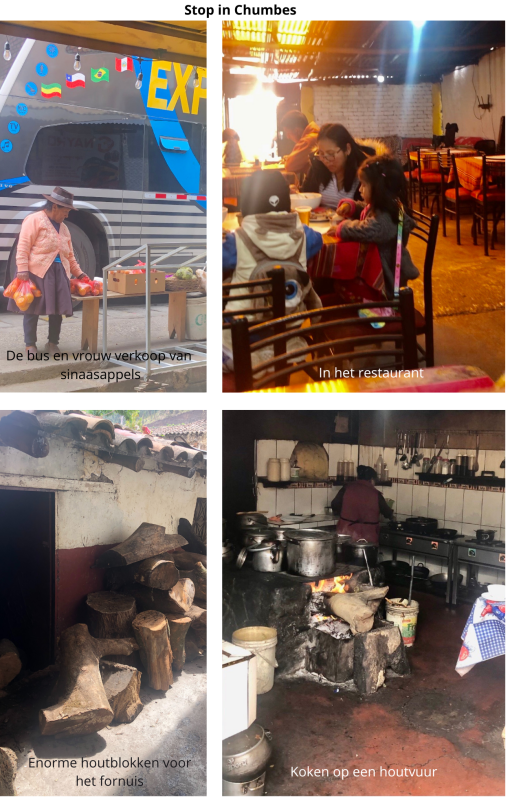
In de ochtend stopt de bus hoog in de bergen in het plaatsje Chumbes. Iedereen stapt uit. Een plasstop en als je wilt kun je iets eten in het restaurant waar de bus pontificaal voor staat. Helemaal achteraan in het restaurant zijn de toiletten. Deze zijn super simpel en niet bepaald schoon. In het gangetje liggen gigantische houtblokken. Na het toilet zien we in de keuken een boomstam die een groot houtvuur maakt onder het fornuis. We eten soep en een taco van omelet met rijst. Dat smaakt goed. Na een half uurtje stappen we allemaal weer in. Om 14.00 arriveren we in Ayacucho. We eindigen weer in een bus terminal.
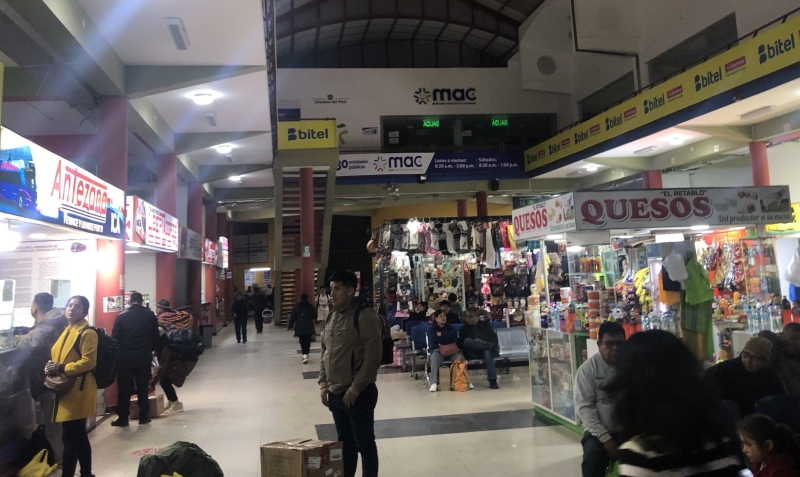
Foto: Bus terminal Ayacucho
Ondertussen snappen we de routine. Meerdere aanbieders voor dezelfde bestemming. Wij willen naar Huancayo en kopen een ticket voor de komende nacht. In de bus hebben we redelijk geslapen, maar om niet over vermoeid te raken stappen we een hostel in om te kunnen liggen tot 21.00 uur. Hier vieren we eventjes ons 24 jarig huwelijk met een cracker met jam en vallen in slaap. We slapen dwars door het eentonige geluid van een luidspreker heen. Ayacucho ziet eruit als een leuk stadje. Mensen zitten gezellig met hun koopwaar op straat en de sfeer is prettig. Wij zijn op doortocht.
De tocht naar Huancayo is anders. De bus rijdt door bergen en dalen, op smalle, hobbelige ongeasfalteerde wegen waar een vrachtwagen en een bus elkaar niet kunnen passeren. Op een moment rijdt onze bus een lang stuk achteruit om groot verkeer langs te laten gaan. Uit het raampje komt de afgrond op ons af. We bedenken ons maar dat deze bus iedere dag dezelfde route rijdt. We snappen dat er ’s nachts wordt gereden, overdag is het niet te doen met meer verkeer. Na 8,5 uur reizen komen we om 6 uur ’s ochtends aan in Huancayo. Het is ondertussen 12 september. We duiken het eerste hotel in tegenover de bus terminal. Hier blijven we tot de volgende dag.
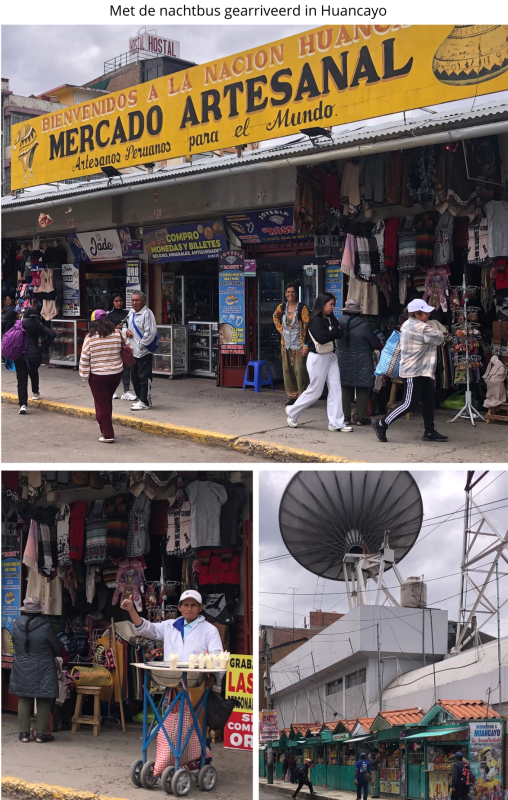
We zijn nieuwsgierig naar Huancayo en trekken er al vroeg op uit. We lopen door de straten en ontdekken de vele vegetarische restaurants die in één en dezelfde straat blijken te zitten. Huancayo is absoluut niet toeristisch en dat merken we als een ontbijt, in het Spaans, bestellen. Voor €2 eten we een lekker Peruaans ontbijt met thee. Het is fijn om het Peruaanse leven te ervaren op deze manier. Wij zijn de enige buitenlanders die door de straten van Huancayo struinen. We lopen over de markt en worden verrast door feest en drukte. Feest van dansende Peruanen op het plein voor de kerk en drukte van een demonstratie van ziekenhuis personeel. We vragen aan een verpleegkundige waarvoor ze demonstreren. We begrijpen dat ze onderbetaald worden.
Als Lida op de Central market even op een bankje zit te wachten begint een Peruaanse vrouw in het Engels tegen haar te spreken. Dat gebeurt eigenlijk nooit. We praten wat over haar verhuizing naar USA en dat ze nu samen met haar dochter op bezoek is bij familie in haar geboorteplaats Huancayo. Haar dochter spreekt vloeiend Engels. Ze is in de USA opgegroeid. Zij toont ons de plek waar de taxi’s naar Jauja staan en legt uit hoe het werkt met gezamenlijke taxi’s. Zonder hun uitleg hadden we dat nooit gevonden.
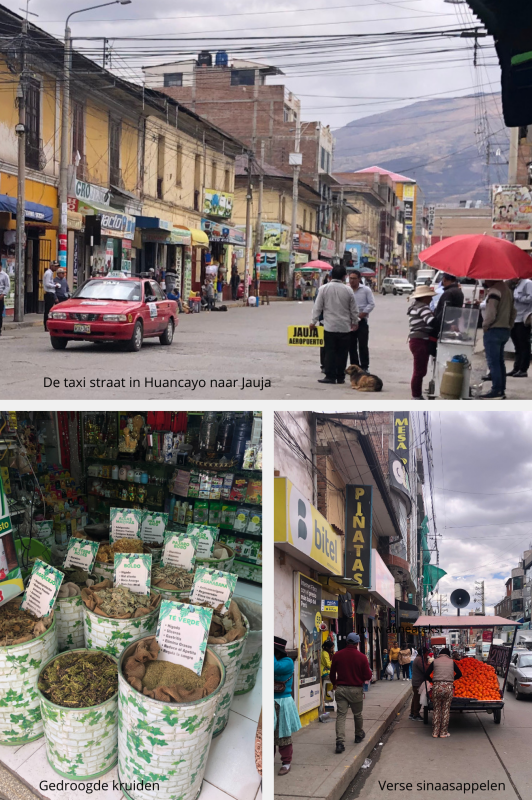
We vermaken ons in de lange smalle straten vol winkeltjes met o.a. folkloristische kleding, restaurantjes en Peruaans eten. Die nacht slapen we heerlijk. In de vroege ochtend om 6.30 uur is Gabrielle in meditatie en hoort Lida de fanfare. Daar lopen tientallen militairen in mars door de straten van Huancayo. Een bezienswaardigheid die wij niet kennen in de Nederlandse cultuur. In het hotel werken een paar jongeren die hun Engels willen oefenen. We vinden het leuk met hun de taal uit te wisselen. Na het ontbijtje in het restaurant lopen we, op zaterdag 13 september, met onze rugzakken naar de gezamenlijke taxiplek en vertrekken we naar Jauja.
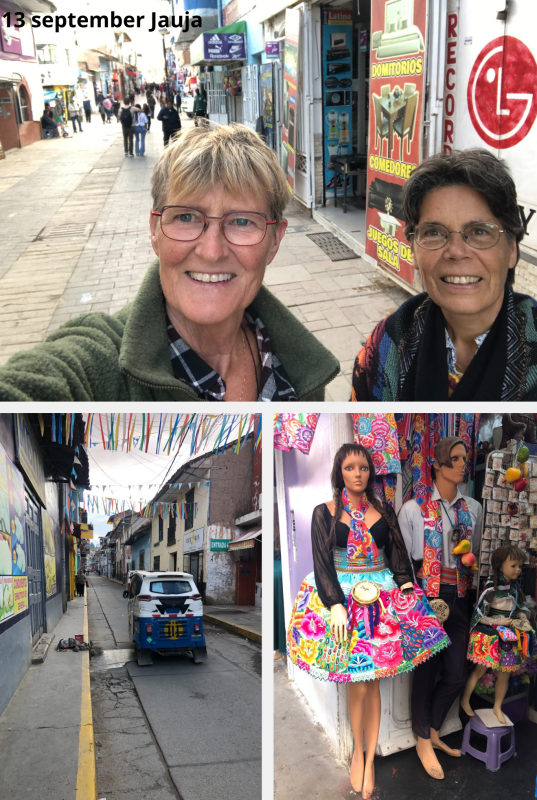
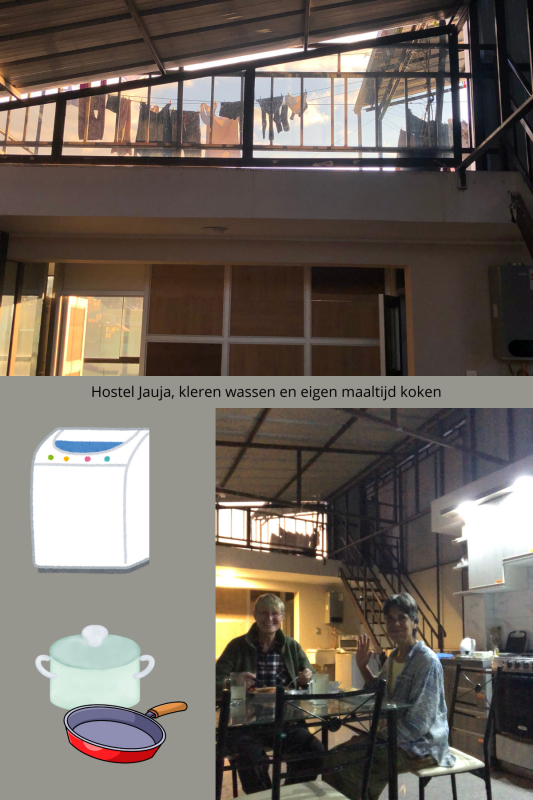
We zijn goed op schema en amuseren ons in Jauja. Dit is een klein stadje waar veel tuktuks rijden. Het heeft een gemoedelijke sfeer. Het adres van het hostel is moeilijk te vinden, maar de kamer is fijn. En we kunnen koken in de gezamenlijke keuken, dat is prettig en een tijdje geleden.
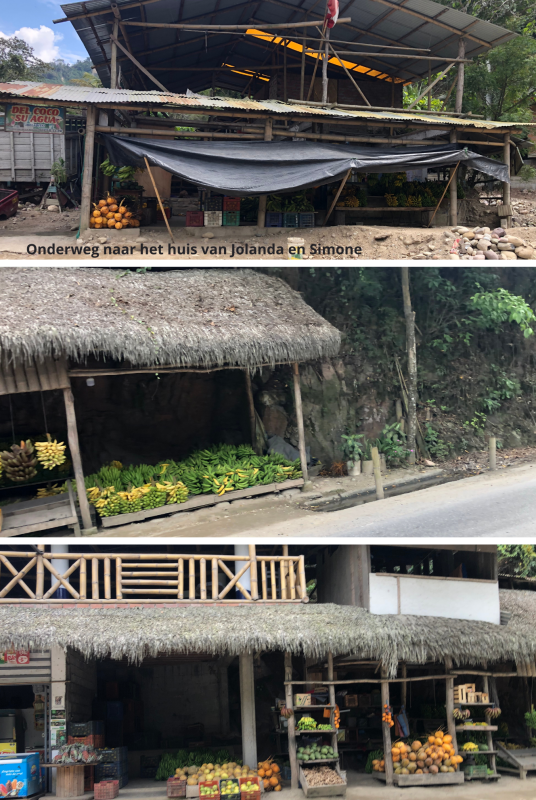
Op zondag 14 september om 6.00 ’s ochtends rijden we met de tuktuk naar het vliegveld van Jauja. De huismeester van het hostel is zo aardig om onze rit te betalen als tegenprestatie dat wij het hostel niet goed konden vinden. Onze tip: zet het huisnummer op de deur. Op het vliegveld ontmoeten we Jolanda. Zij is vanaf april in Nederland geweest voor haar schouderblessure en het herstel daarvan. Na een aantal maanden was het voor haar weer thuiskomen. Met haar vaste taxi chauffeur rijden we in vier uur naar haar huis in Chontacamba. Dit ligt ongeveer 20 km vanaf het stadje Oxapampa de bergen in.
Jolanda en Simone zijn twee Nederlandse vrouwen die elkaar vijftien jaar geleden in Guatemala hebben ontmoet. Jolanda is chefkok en Simone is documentaire maakster. Wij kennen hen via trusted house sitters. In Guatemala werkten de beide dames als vrijwilligsters bij een project met schooltuintjes. Het doel was om mensen te leren zelfstandig gezonder te eten en eigen groente te verbouwen. Later hebben ze hun werk voortgezet in Peru waar ze via een stichting (school)tuinen projecten hebben opgezet. Het project loopt erg goed en is voor hen nu in een afrondende fase. Jolanda vertelt dat ze 2 wekelijks de bergen introk om met mensen en kinderen te werken. Het dorp Patacancha, waar wij geweest zijn, kennen zij goed en was onderdeel van het project. Na 14 jaar Cusco en het opkomende toerisme besloten ze een andere plek te vinden. Zij hebben een land van 22 hectare gekocht in de gemeente Chontacamba. In 4 jaar tijd hebben zij door hard werken hun weelderige sanctuary gebouwd. Samen met twee Peruaanse broers hebben ze het modderige terrein geïrrigeerd door overal smalle kanalen te graven. Ze hebben zelf hun schitterende huis ontworpen en gebouwd. Er is een prachtige schuur, een grote stal voor de dieren, een lodge die gehuurd kan worden en 1 hectare permacultuur met groenten en fruit. Aan het begin van het erf staat een lief klein huisje voor de bewakers. De twee Peruaanse broers wisselen elkaar om de 14 dagen af. Het is prachtig wat ze hebben opgebouwd. En wij maken dankbaar gebruik van de lodge en genieten van het omringende, prestigieuze Andes gebergte.
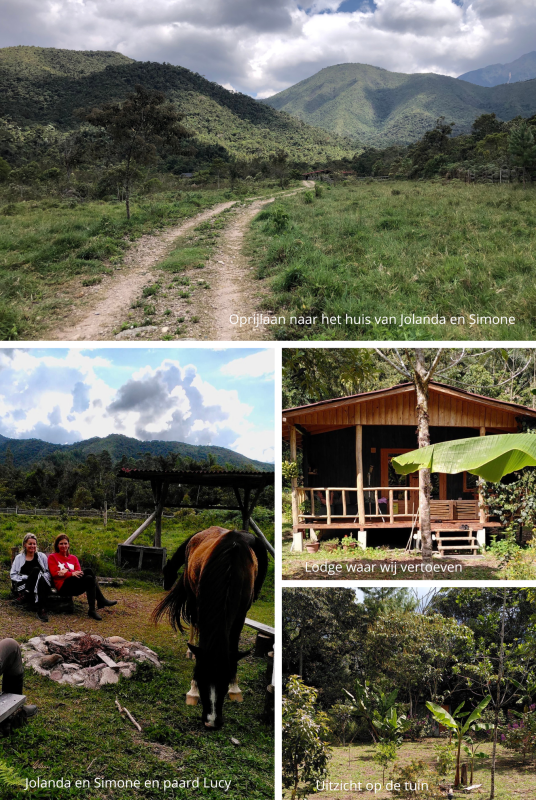
We maakten mee hoe Jolanda thuis kwam uit een ander leven. We leerden van Simone hoe we om moeten gaan met de 3 paarden en de 2 koeien. Dat is tot nu toe ons belangrijkste werk, naast het bijhouden van de tuin van 1 hectare permacultuur.
Kijk ook naar deze documentaire van NPO Vergezocht over Jolanda en Simone.
https://youtube.com/watch?v=SVy3QC1b5XQ&si=B89CJTMjA84hPdjA
Text in English
From Ollantaytambo to Chontacamba, 09-10 - 09-14
On Wednesday, 10 September, we are packed and ready at the Plaza de Armas in Ollantaytambo, waiting for the taxi driver we ordered. Our destination is Abancay, 194 km away. That's more than a 4-hour drive. Once we are settled in the car, the driver realises that we don't want to go to Cusco, which is only an hour and a half away. Apparently, he responded blindly to the request. After all, all tourists want to go to Cusco, but we do things differently. After some discussion, he agrees to take us to the hotel in Abancay for what we thought was a reasonable price. 500 Peruvian soles is 120 euros, but alas. For the taxi driver, it's a very good income. The Andes is not a motorway to France. Bends, braking, accelerating, up, down, slow, fast. Lida's stomach disagrees with the driver's riding style and throws up. There we are, in the middle of the road next to a steep cliff, hoping that no car will crash into us from behind. During our traveling, we say to each other a few times that it is better to travel with an empty stomach.
After a five-hour trip, we check into the hotel. Abancay is a grey and boring town where few tourists come. We are therefore left alone. What a completely different environment from Cusco, where merchandise is literally dropped on your lap. We walk to the bus terminal to find out when the next bus to Ayacucho leaves. It is a lively place where several tour operators sell their traveling. However, there is only one bus a day to our destination, leaving at 1:00 a.m., in other words, tonight. Due to our limited time, we decide to continue traveling quickly and buy a ticket. We then look for a vegetarian restaurant, which proves impossible to find. Not even when we ask several people for directions in our best Spanish. In the end, we eat something from the supermarket and rest in our room.
At midnight, we are sitting at the bus station waiting for the bus. ‘Darling, today is 11 September, our wedding anniversary, congratulations.’ Feeling a little surreal, we sit waiting with a book and look around. There are security guards and we feel safe. Every time we hear a bus arriving, we look up hopefully. But no, over and over again, the half-asleep guard tells us it’s not our bus. Travellers come and go and disappear into the night. Finally, at 3 a.m., our bus arrives. We are the only two travellers being picked up in Abancay. The bus is full and we walk along sleeping people, in a half-sitting/lying position, to the very back where our seats are. The seats are comfortable. Even though we sleep most of the time while traveling, it is clear that we are driving through the mountains. Our bodies move with every bend, climb, and descent. The road seems in good condition. The journey is long, taking us 11 hours.
In the morning, the bus stops high up in the mountains in the town of Chumbes. Everyone gets off. A toilet break and, if you want, you can eat something in the restaurant where the bus is parked. The toilets are at the very back of the restaurant. They are very basic and not particularly clean. There are huge wooden logs in the corridor. After using the toilet, we see a tree trunk in the kitchen, which is used to make a large wood fire under the stove. We eat soup and an omelette taco with rice. It tastes good. After half an hour, we all get back on the bus. At 2 p.m., we arrive in Ayacucho. We end up at a bus terminal again. By now, we understand the routine. There are several providers for the same destination. We want to go to Huancayo and buy a ticket for the coming night. We slept reasonably well on the bus, but to avoid getting too tired, we check into a hostel so we can lie down until 9 p.m. Here we celebrate our 24th wedding anniversary with a cracker and jam and fall asleep. We sleep through the monotonous sound of a loudspeaker. Ayacucho looks like a nice town. People sit comfortably with their wares on the street and the atmosphere is pleasant. We are just passing through.
The journey to Huancayo is different. The bus drives through mountains and valleys, on narrow, bumpy unpaved roads where a lorry and a bus cannot pass each other. At one point, our bus reverses a long way to let large traffic pass. The ravine approaches us through the window. We remind ourselves that this bus drives the same route every day. We understand that they drive at night because it is impossible to do so during the day with more traffic. After 8.5 hours of traveling, we arrive in Huancayo at 6 a.m. It is now 12 September. We check into the first hotel opposite the bus terminal. We stay here until the next day. We are curious about Huancayo and set out early. We walk through the streets and discover the many vegetarian restaurants that turn out to be located on one and the same street. Huancayo is definitely not touristy, which we notice when we order breakfast in Spanish. For €2, we eat a delicious Peruvian breakfast with tea. It's nice to experience Peruvian life this way. We are the only foreigners strolling through the streets of Huancayo. We walk through the market and are surprised by the festivities and hustle and bustle. There is a celebration with dancing Peruvians in the square in front of the church and a demonstration by hospital staff. We ask a nurse what they are demonstrating for. We understand that they are underpaid.
As Lida sits on a bench waiting at the Central Market, a Peruvian woman starts talking to her in English. That hardly ever happens. We chat about her move to the USA and how she is now visiting family in her hometown of Huancayo with her daughter. Her daughter speaks fluent English. She grew up in the USA. She shows us where the taxis to Jauja are and explains how shared taxis work. Without their explanation, we would never have found it.
We enjoy ourselves in the long narrow streets full of shops selling folkloric clothing, restaurants and Peruvian food. That night we sleep wonderfully. In the early morning at 6.30 a.m., Gabrielle is meditating and Lida hears the fanfare. Dozens of soldiers are marching through the streets of Huancayo. A sight we are not familiar with in Dutch culture. A few young people who want to practise their English work at the hotel. We enjoy exchanging languages with them. After breakfast in the restaurant, on Saturday 13 September, we walk with our backpacks to the shared taxi place and leave forJauja.
We are well on schedule and enjoying ourselves in Jauja. This is a small town with lots of tuk-tuks. It has a friendly atmosphere. The hostel's address is difficult to find, but the room is nice. And we can cook in the communal kitchen, which is pleasant and a change from a while ago.
On Sunday, 14 September, at 6:00 a.m., we take a tuk-tuk to Jauja Airport. The hostel manager is so kind to pay for our ride in return for our difficulty in finding the hostel. Our tip: put the house number on the door. At the airport, we meet Jolanda. She has been in the Netherlands since April for her shoulder injury and recovery. After a few months, it was time for her to return home. With her regular taxi driver, we drive four hours to her house in Chontacamba. This is about 20 km into the mountains from the town of Oxapampa.
Jolanda and Simone are two Dutch women who met fifteen years ago in Guatemala. Jolanda is a chef and Simone is a documentary filmmaker. We know them through Trusted House Sitters. In Guatemala, both women worked as volunteers on a project involving school gardens. The aim was to teach people how to eat more healthy food independently and grow their own vegetables. Later, they continued their work in Peru, where they set up (school) garden projects through a foundation. The project is going very well and is now in its final phase. Jolanda says that she went into the mountains every two weeks to work with people and children. They know the village of Patacancha, where we have been, very well, and it was part of the project. After 14 years in Cusco and the upcoming tourism, they decided to find another place. They bought 22 hectares of land in the municipality of Chontacamba. In four years, they built their lush sanctuary through hard work. Together with two Peruvian brothers, they irrigated the muddy terrain by digging narrow canals everywhere. They designed and built their beautiful house themselves. There is a beautiful barn, a large stable for the animals, a lodge that can be rented and one hectare of permaculture with vegetables and fruit. At the entrance to the property is a lovely little house for the guards. The two Peruvian brothers rotate every 14 days. It is wonderful what they have built. And we gratefully use the lodge and enjoy the surrounding, prestigious Andes mountains.
Working with people and children. They know the village of Patacancha, where we visited, very well, and it was part of the project. After 14 years in Cusco and the rise of tourism, they decided to find another place. They bought 22 hectares of land in the municipality of Chontacamba. In four years, through hard work, they built their lush sanctuary. Together with two Peruvian brothers, they irrigated the muddy terrain by digging narrow channels everywhere. They designed and built their beautiful house themselves. There is a beautiful barn, a large stable for the animals, a lodge that can be rented, and one hectare of permaculture with vegetables and fruit. At the entrance to the property is a cute little house for the guards. The two Peruvian brothers rotate every 14 days. It is wonderful what they have built. And we use the lodge gratefully and enjoy the surrounding, prestigious Andes mountains.
We witnessed Jolanda returning home from a different life. Simone taught us how to care for the three horses and two cows. That has been our main task so far, in addition to maintaining the one-hectare permaculture garden.
Please also view this documentary by NPO Vergezocht about Jolanda and Simone.